
Let the Blue in
On moves, memories, and a colour threading through

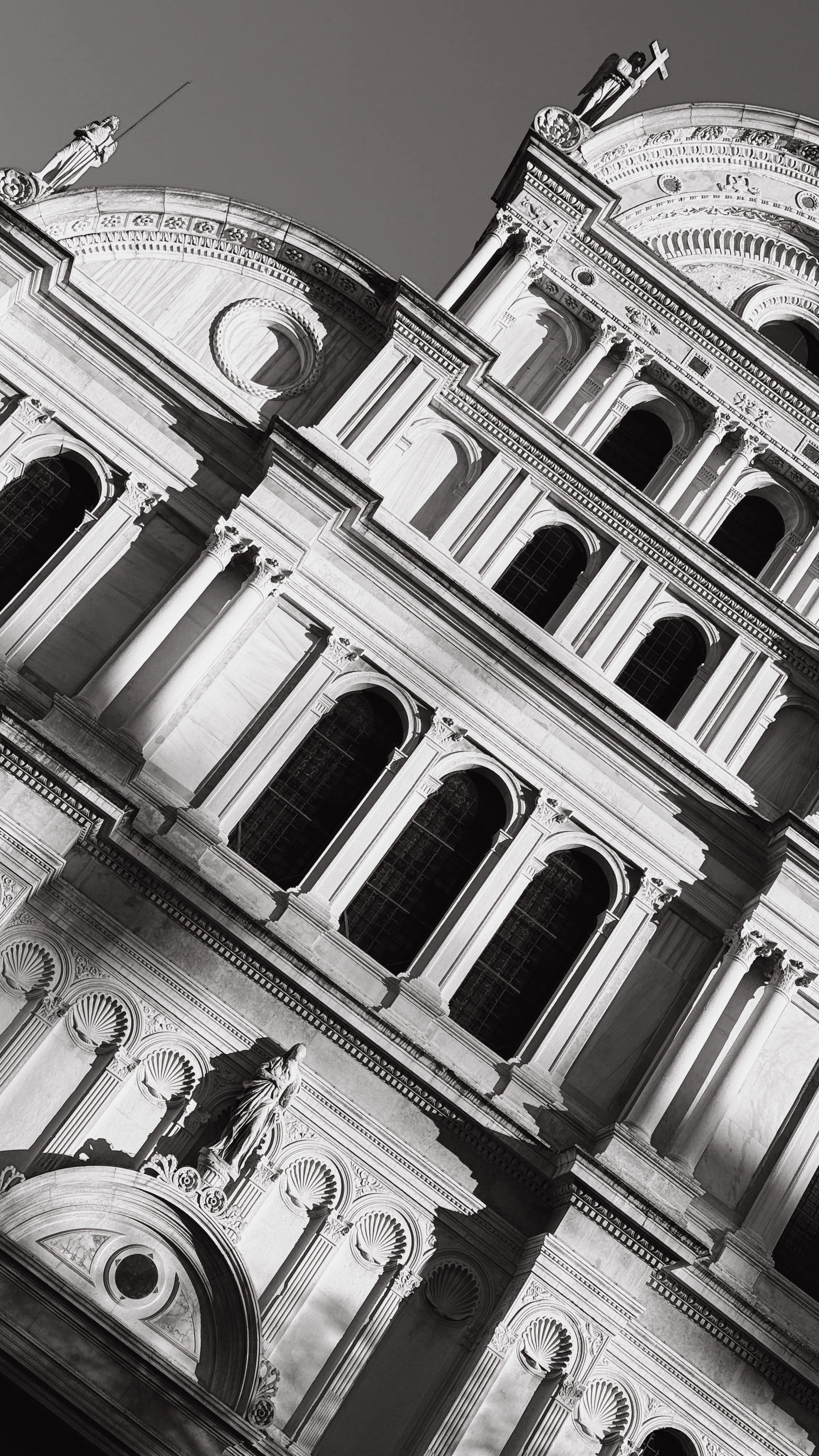
January-February 2026 / Venice
The year began with a move.
With all the gestures that come with wrapping up a life. Which, in my case, meant dividing it into small portions, placing them inside blue IKEA bags, and carrying them two by two on the vaporetto, back and forth along the Northern shore of Venice, until every semblance of what made that life—the whole weight of it: books, tablecloths, pillows, plates, chairs— was stripped away from the old place and dumped on the floor of the new one.
All in all, it took me a week to do it. The blue IKEA bags destroyed my back but that was partially my fault. They are very capacious, and I got overeager. I was punished for my hybris with what I thought was a hernia, but it was just my lumbars screaming at me.
Over the following days, emails and messages found me covered in wall and wood dust as I disassembled furniture and drilled holes and installed floor-to-ceiling curtains along the entire length of the new flat, or scraped glue from cabinet fronts with a blow dryer and a yet-to-expire debit card, or replaced handles and knobs to upgrade the kitchen. I drew great pleasure in accomplishing visible change to my immediate surroundings through small interventions. Work kept piling up. I resisted its pressure. I set-up an out of office and carried on.
“How’s the new house?” people have been asking.
And I’d say that it’s bigger and brighter and has four south-facing windows overlooking a canal. On a day like today, steaks of wobbly light crawl on the white ceiling, reflecting the water down below. I hear voices and boats passing by. Already, my life feels more expansive. It also feels different. Rituals have changed. The bars I go to have changed. The food I buy has changed. But what is a move if not a form of re-wiring? The eye needs time to adjust; so do the hands and feet. Everything else will follow. Or so I thought.
After the bulk of the work was done, I began spending long hours standing on thresholds, pondering the next steps—the pars construens. I measured rooms with my shortsighted eyes, imagining the ways in which I could inhabit the novelty, make this new chapter more adherent to the person I had become. This is when I lost momentum: when the thinking prevailed on the doing. Staring at a blank wall and guessing what it could be—a quadrerie; a set of floating shelves for books and memorabilia; a white canvas to project movies onto—I struggled to settle on any of the options that were available to me. I told myself I didn’t want to rush it. But the truth was: I had lost touch with what I wanted.
Except for one thing. Cutting through the fog of my clouded judgement, a single, impertinent, incandescent desire emerged. It was a desire to bask in blue. It asked me to let the blue in, because, if anything, it was the most faithful reflection of the person I had become. I was blue. So be it.
”And so I fell in love with a colour,” Maggie Nelson writes in the opening line of Bluets. “In this case, the colour blue. As if falling under a spell, a spell I fought to stay under and get out from under, in turns.”
I wonder if being entranced by blue is a form of malfunction. Like a vitamin deficiency. Like an inner bruise that demands recognition. If that’s the case, then my very own bruise has been deepening rather than healing. It’s so bright and bold that it leaks onto everything, pour out of me, punctuate my reality. Some days, it tinges my vision the colour of a clear sky. Others, it’s like floating without oxygen in the depth of an ocean. Always, when the blue is running low, I can sense its thirst. All it wants is to drink more blueness from the source—big, painful gulps. I can’t always persuade it otherwise.
This is how I opened the door to the deepest source of blue one rainy night in January. It came to knock on my door and said, “You seem happy.” And then, “You can’t walk away from what you know to be true.” And I said—drinking, drinking some more—that all I wanted was for the blue to become warmer.
It never did.
No matter. I have enough now to bathe in it, endure it, wear it, dot the house with it. Objects as mirrors of what’s burning within—a vase and a blanket and a pouf in a shade called blueberry pie. They reflect the blue back to me so I can see it, domesticate it. An out-of-body experience.
“How clearly I have seen my condition, yet how childishly I have acted,” says Goethe’s sorrowful young Werther. “How clearly I still see it, and yet show no signs of improvement.”
– Bluets
November 2025 / London
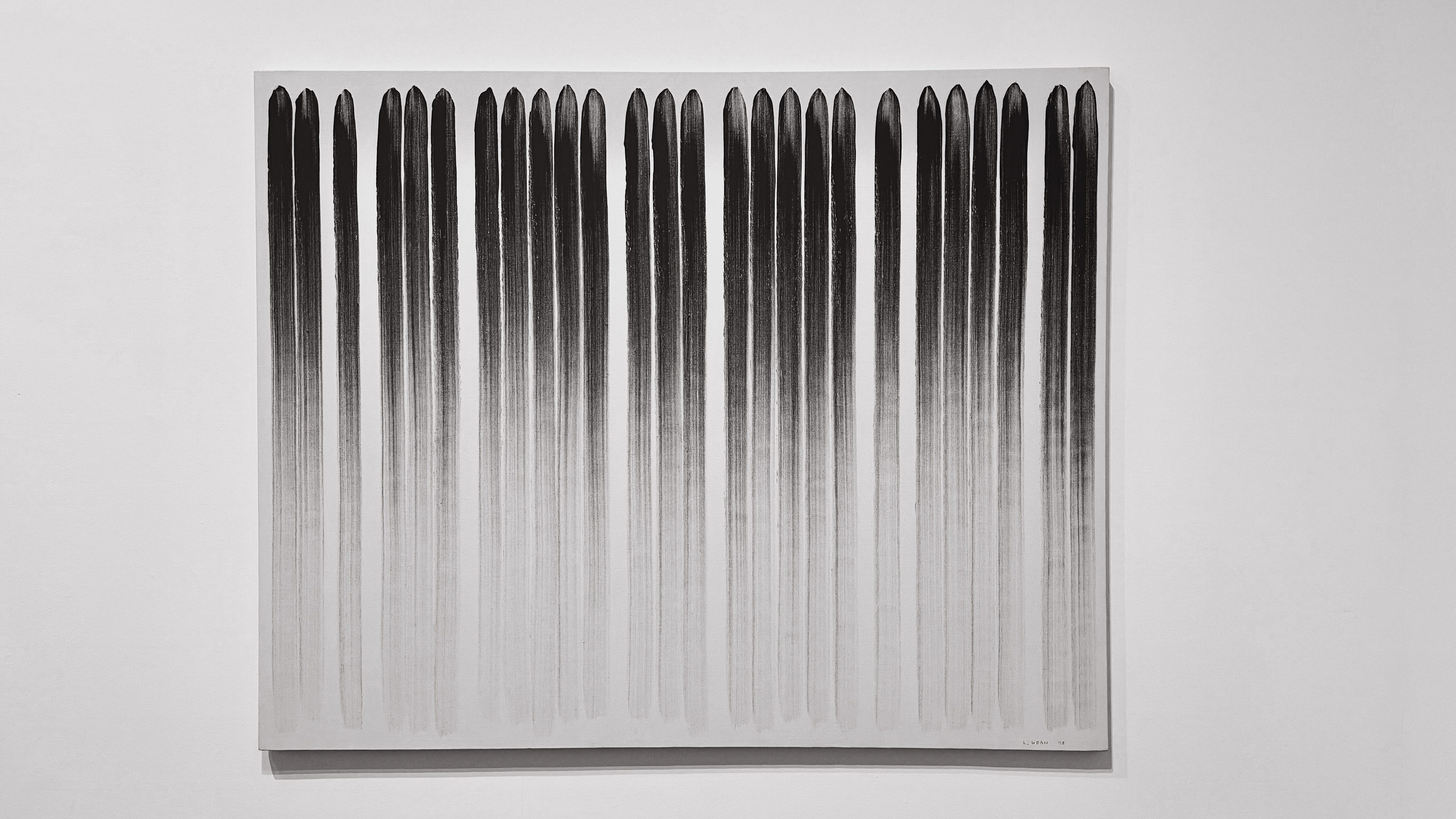
Inside the Tate Modern, I stop in front of a painting by Lee Ufans titled From Line. The note beside the painting reads: “This work belongs to a series that Lee made by tracing long lines until he used up the paint on the brush. He laid the canvas horizontally and carefully controlled his breathing during each of these slow mark-making gestures. Describing his method, Lee wrote: ‘Load the brush and draw a line. At the beginning it will appear dark and thick, then it will get gradually thinner and finally disappear…A line must have a beginning and an end. Space appears within the passage of time, and when the process of creating space comes to an end time also vanishes.’”
I take a photograph of the painting and then forget about it in the depths of my camera roll. Until, one day—on one of those fervent days in the new house, with all my books still piled on the floor and shelves in need of mounting—I decide to lay pieces of paper on the table and draw long, thin lines in bright blue watercolour. I hold my breath to get them straight. On a material level, I want to replicate what Ufans did—load a brush and paint in streaks of blue. On a conceptual level, I want to make time vanish. Some attempts are better than others.
I choose the most precise version and frame it.
“White frame,” the biggest source of blue says.
Fine, I say.
April 2025 / Urbino
On a weekend trip, I suggest we visit a shop that produces hand-dyed fabrics using a naturally-extracted blue pigment called guado. The woman running the shop says the technique dates back to the Renaissance and is typical of the area, as the pigment comes from a wild yellow flower that grew abundantly in the surroundings of Urbino. Through a series of fermentation and drying stages, she says, the Urbinates were able to obtain a staining powder. Blue tinted fabrics became a must-have among wealthy families, and artistic depictions followed suit, mimicking the taste of the time. Increasingly, more and more Madonnas and prominent characters were painted in guado-coloured robes. Celeste the colour, celestial the message. Until indigo arrived from the East, and that was the end of it.
In the shop, a mix of old tools, books and artifacts are displayed alongside items for sale: sky-blue silk scarves, handkerchiefs, shawls. I pick a square neck scarf. The deepest source of blue buys it for me. I thank him. “You didn’t have to,” I say. “I wanted to,” he says.
Later, I tie the blue thing to my hair and hear it flap in the wind through the open window as we drive up and down the hills that Piero della Francesca drew in his paintings—verdant and untouched. We are looking for wine and bread and cheese for our Easter dinner, which we consume on the patio of a remote of hilltop house, river-talking, the dog running through the grass, the neck scarf shining in candle light like some divine apparition, or an eerie omen.
“Disavowal, says the silence.”
– Bluets
March 2025 / Venice
I am walking down the left aisle of San Zaccaria when he comes to me and whispers in my ear, “Is this where we should get married?”
The air is thick with incense, blown-out candles and dust. Outside, a light spring rain wets the parvise.
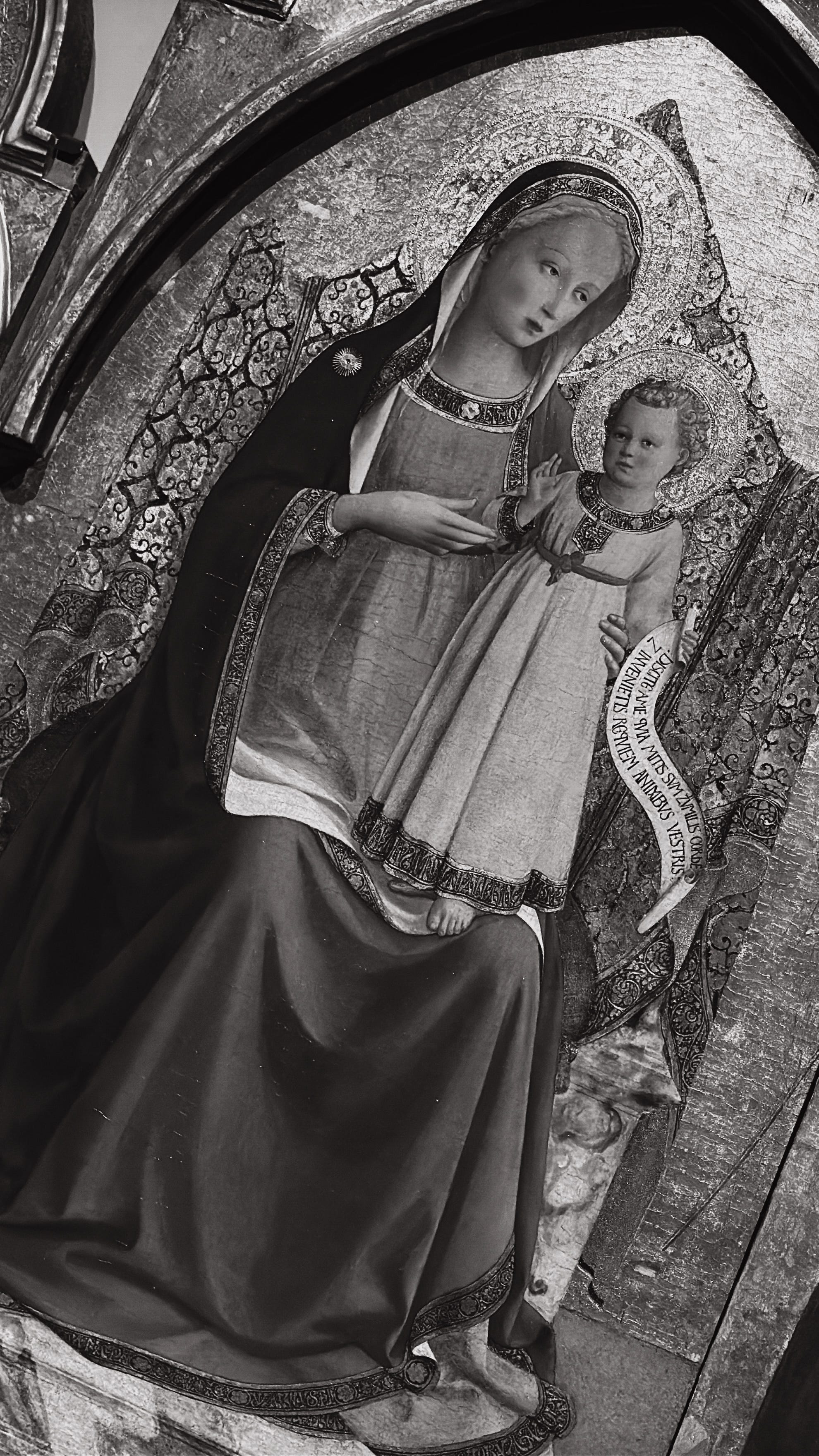
I have stopped to observe the timid expression of the Madonna and Child by Bellini, both gazes cast downward, demure, as if hiding some unspeakable truth while being resigned to its certainty.
Do you remember studying this in high school?” he says, standing by my side, looking at the painting.
“I do, I just don’t remember the analysis.”
“It’s OK. Do you like it?” he asks, fishing in his coat pocket for a coin to light a candle.
“Of course I like it. It’s a Bellini.”
“That doesn’t mean anything.”
“I like the colours. Look how bright the reds and blues are! They don’t match the mood of the people one bit.”
“You always wear blue,” he says, changing the subject. “You have an elegance about yourself you’re clearly not aware of.”
I blush and kiss his cheek.
“This is a beautiful church to get married,” I say. “I still prefer the Chiesetta dei Miracoli.”
“That is to say: I don’t care if it’s colourless.”
– Bluets
Picture a beautiful piece of clothing. Let’s assume it’s a blazer. Let’s say it’s blue.
Nicely cut, fine fabric, excellent workmanship. You try it on and immediately notice how flattering it is; how the colour brings out your best features.
Really, it’s perfect. And still, there’s something—something you can’t quite pinpoint—that makes you question whether to buy it or not. Is it the price tag? A bit steep, perhaps, but fair for the quality. Is it that you might not find the right occasion to wear it? Come to think of it, the fit is rather versatile; you can see yourself wearing it in various situations, look smart and appropriate. Maybe the reason is that it doesn’t really go with the rest of your wardrobe. You take a second look at yourself in the mirror, turn around, make a step back and then forth. No, you think. It’s not that. Truly, it could match so many of your pieces, and upgrade them by sheer proximity.
What is it, then? Why the hesitation? You’re not sure. So you decide to think about it. Yes, you tell yourself, exiting the shop: No rushed decisions.
Back on the street, you make yourself walk into other shops, try on a few things that require a smaller investment, demand less thought. You detect some resistance in your body, as if it was trying to tell you something—something along the lines of, “You know what you want. You know it’s not this. This—all this—is precisely what you don’t want.” But you override your gut feelings and buy a bunch of pieces, thinking it’s the most sensible choice you can make, thinking, too, that you got more for your money.
At home, you try them on again without removing the tags. In the mirror, you observe, not without an expression of distaste, how the cheap fabric falls flat, or how the hems are coming undone already, or how the buttons are, in fact, plastic. The reflection restitutes an image of poor taste, poor judgement. The next day, you return the pieces and all you feel is relief.
Meanwhile, the blue blazer is still an open tab in your head. On a head-clearing walk you take for other reasons, you find yourself evaluating the pros and cons of getting it. Pros: incredibly beautiful, refined, durable. A statement piece. Cons: requires proper care when wearing it, storing it, cleaning it. What a hassle, really. Is it worth the trouble? Can’t you wait and see if there’s something else you like just as much, for less? Isn’t your life complicated enough as it is? You fear you won’t have the resources to tend to it and, without a doubt, you’ll ruin it.
So you keep looking for something in between; something that looks just as nice but needs less upkeep, asks less of you; something you can chuck in the washing machine and call it a day. You walk into a department store one day and find a more affordable piece. The fabric is soft, the colour is nice enough, the cut is right for your frame. That’s what you meant: a reasonable compromise. You head to the till and pay. But as you put the card back in your wallet, all you’re thinking about is the other blazer, hanging there, dazzling. The thought won’t leave you alone. You think about it while you walk home with your new purchase in hand, and, again, when you first wear it out and all you feel is self-conscious.
Time passes. You catch yourself thinking about the blazer sometimes—inevitably, whenever you open your closet in search of something of that quality and know—just know—that that’s the missing piece. Or whenever you wear other clothes and don’t feel quite right; you think about it, long for it. Mostly, though, you are fine; you’ve come this far without it. The thought of it brushes your consciousness, then slowly fades, buried under layers of life worries.
Until, one day, you walk in front of the shop and the urge to see if it’s still there makes you walk through the threshold. You spot it from a distance—a sense of warmth filling your lower belly as you approach it. Yes, you think. There it is. Let’s try it on again, just for kicks. You touch it; let out a sigh as you run your hands on the sheen of the wool fabric. It’s so perfect. You pick it up from the rack, and head towards the changing rooms, eager to remove your clothes and feel its weight against your shoulders.
The shop assistant comes towards you and asks if you need any help. You are just going to try the blue blazer on, if that’s OK. Sure, she said, showing you to the changing rooms. Oh, yes, thank you, you say. I know where I’m going. I’ve been here a few times already.
Behind the curtain, you begin to undress: jumper, shirt, undershirt. You stare at your bare chest in the mirror and a shiver runs down your spine. Your body is electric, eager to be touched. You slide your right arm inside the right sleeve, then the left—the cold softness of the silk lining on your naked skin like an awakening, the gravity on your shoulders a humbling memento. You close your eyes and, instinctively, you start moving—small, hinted movements of your arms and legs that soon become wider, more intentional, like a slow dance that entrances you. You can’t stop, don’t want to. Your muscles contract and press against the fabric, your fingers brush the wool—fuzzy, dark. You hear music in your head; a synesthesia.
Are you ok in there? The shop assistant asks after what felt like seconds, or hours. Yes, you say, and snap into present tense, eyes focused to your reflection in the mirror—flushed face, tousled hair, the blue blazer on your bare chest. A rush of embarrassment floods your veins, fogs your judgement. This is ridiculous, you think. What got into you now? Stop this nonsense already. You remove the blazer in panicked, uncoordinated gestures, as if it was a stinging bug that landed on your body, and in doing so you almost tear the lining. Thank you, you say to the shop assistant as you walk out in a blur. Thank you, I’ll think about it. Outside, the cold air of a winter morning like a sharp bite. That bloody blazer, you think. Forget it.
Weeks pass. The memory of your dance in the changing room is pushed to the edges of your consciousness. Until, walking down your street one evening, you notice someone striding in front you you, wearing something you think you recognise. You pick up your pace to take a closer look, but the person has already crossed the street and turned the corner. You slow down, catch your breadth. The need to go and see if the blazer is still hanging on its rack overwhelms you, makes you want to drop your plans. So you do. You turn around and start running.
Once at the shop, panting, cold-sweating, you ask the assistant about the blazer. Which blazer? She says. You describe it in detail, trying to seem calm. Oh, yes, she says. She tells you, in staged consternation, that they sold it the previous day. Who bought it? You ask. You can’t control your facial expressions now. Is it panic the assistant sees? Anger? Well, she says. I can tell you this much: It was love at first sight. This person walked in for a quick browse, spotted the blazer, tried it on, and bought it without a second thought. That’s how things go sometimes: if you think about it too much, you’ll sure find a reason not to do it. If I may ask, what made you hesitate? You seemed to really like it.
You smile and say, looking away at the place where the blazer used to hang, beautiful, lifeless, “It doesn’t matter now, does it? It just wasn’t meant to be,” while a tear falls from the corner of your eye, streaking your cheek blue.
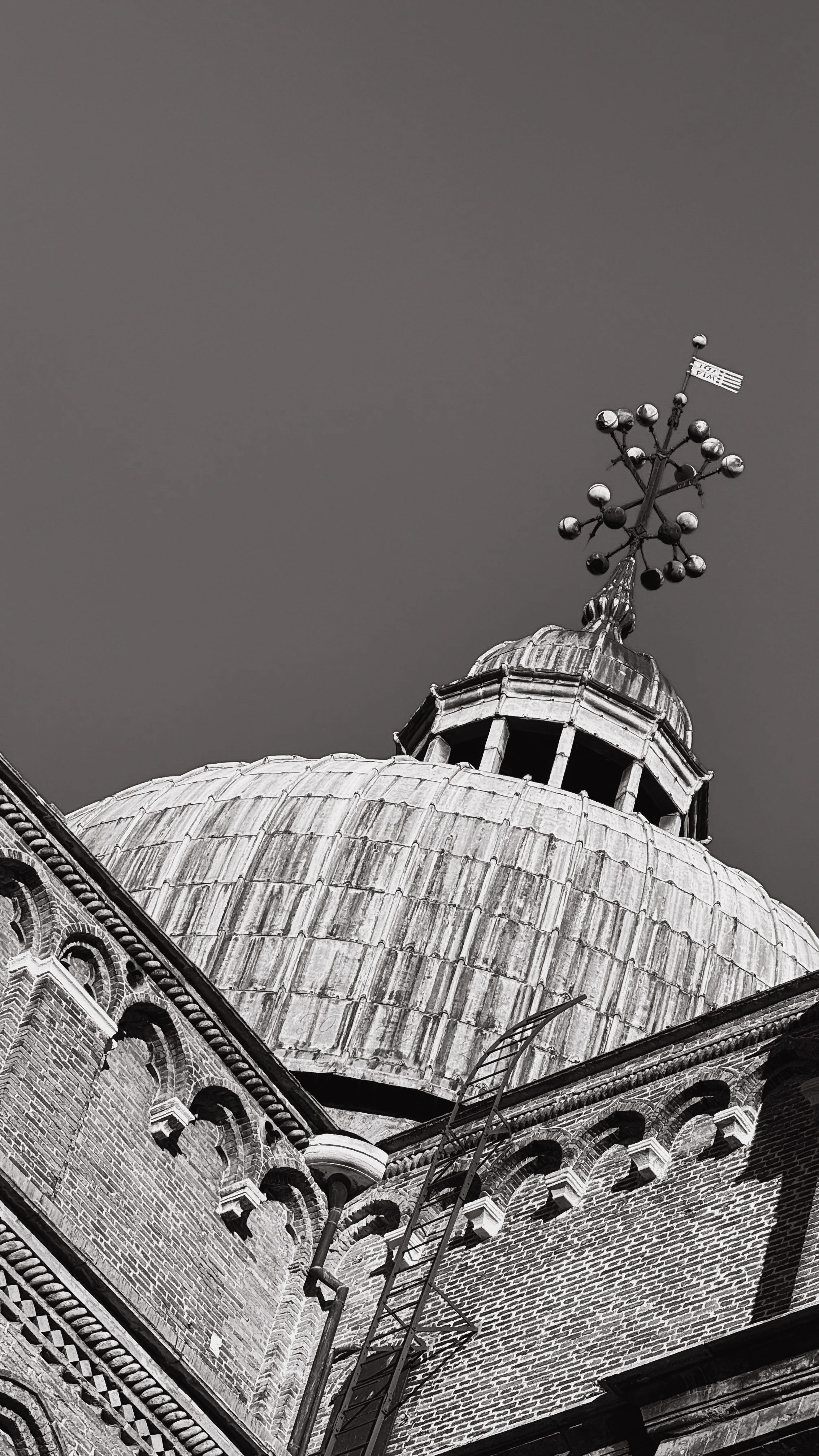
March 2026/ Venice
It’s Spring again.
I deliberately go to bed without closing the shutters so I can open my eyes to a slice of blue. If I had a cyanometre, I would know if the sky today is number 14 or 15. Either way, I crack the windows open to let the blue in.
I set a pot of coffee on the stove, pour it in a blue mug and walk to the window to sip it in direct sunlight. I think of a passage I read the night before, about how we perceive things being a certain colour when, in fact, what we are really seeing is the colour that doesn’t belong to them; the portion of the spectrum they reflect back. That the sky today appears to be a certain shade of blue only means that it has a penchant for refusing to absorb the very colour it shows to be.
What, then, if this love of blue—this sense of being it—is not a deficiency as much as a form of resistance? A refusal to be drunk and drenched and drowned in it? A desire to be other from it, to radiate it, cast it everywhere, without ever becoming it? What if blue is just the portion of wavelength I was drawn to reflect? The colour that allows my life to be visible to me?
So be it, I think, sipping my coffee on this spring day, watching the morning traffic of people and boats passing by. So be it: let the blue radiate. Let it in, let it out. I want to swim in stupor.
There is form of blue that has always been twinned in my mind with you and it is of the blue in Scrovegni Chapel. The one that you took me to at the time when our lives were configured by marriage and a different kind of exploration. That blue has never left me, ultramarine pulling together blues of different places because the Lapis that it comes from, comes mostly from Afghanistan. You write so beautifully, Val.
Absolutely brilliant insights and threads that take me through many streets in my mind.